
Growing Older and the Power of Community
Source: rocket50
By: Janet Peischel rocket50 Contributor
Date: April 20, 2023
Growing Older and the Power of Community
I have a personal story about growing older and the power of community. My mother and stepfather retired in Florida and lived there for 40 years. They had a beautiful home on a lake and my mom loved waking up to the sunshine and watching a flock of magnificent sandhill cranes that would come up on the porch to greet her. Relationships were important to my mom, and she always had lots of friends. But as she got older, one by one, her friends began to die and she was becoming isolated. My stepfather had had a small stroke and was increasingly morose. She was getting lonely, and I worried about her becoming depressed.
A retirement community was my mom’s salvation
Thankfully, they sold their home and moved into a retirement community. My mom was in heaven. People were friendly and she quickly made lots of new friends. She was a retired English teacher and loved to read. There was a little library where she volunteered, she joined a book club and played bridge three-four times/week. She joined a singing group and volunteered at the hospital. There was always something going on, and my mom was having the time of her life. Though she slowed down, she remained busy and active until she died at 94. I’m so glad that she had those seven years; they may have been the happiest years of her life. Being part of that community brought her back to life.
This is my personal testament to the power of connections
For my mom, it’s hard to quantify the relationships she built at her retirement community. They literally changed her life. The statistics show that most people want to stay in their own homes when they retire, to “age in place”, as my folks had been doing. Aging in place can mean caring for a large home and potentially retrofitting it to accommodate a wheelchair. One of the downsides is that it’s easy to become cut off and removed from social interaction. The village concept provides a way for people to stay in their own homes, yet belong to a community that provides support and social interaction.
The villages were founded 20 years ago in Boston
This village concept is called Beacon Hill Village. It was founded 20 years ago in Boston, an organization for people committed to aging in place together. It’s not just a place to live, but a social club, volunteer collective, activity center, peer-to-peer support group, and network for a wide range of services. Aging in place is a common concept now, but at the time it was innovative and drew attention throughout the country. There was speculation that these new villages would sweep the country and it would be the new model for the aging population.
That didn’t quite happen, but today there are 268 villages, and more than 40 thousand members in the U.S. An additional 70 villages are in development. That’s a nice start, but it doesn’t begin to meet the needs of the retiring boomer generation, and the villages are a boutique solution—not a mass market option for aging in place.
Those invested in the village movement have some tough questions about its future
Can these grassroots organizations be seeded more widely in communities across the country to meet the demand of our aging population?
Can they move beyond their white, middle-class roots and attract a broader, more diverse membership?
Can they forge partnerships—local, state and federal funding--that put them on a more stable operational and financial footing?
Villages help older adults live independently in their own homes
Despite their name, physical structures are not part of villages. Instead, they’re membership organizations created by and for older adults whose purpose is to help people live independently while staying in their own homes. Typically, villages help arrange services for members: a handyman to fix a broken faucet, a drive to and from a doctor’s appointment, someone to clean up the yard or shovel the snow. Volunteers do most of the work.
Villages connect members to one another
The villages are hosting discussion groups, sponsoring outings, offering classes, and organizing social events. “I’ve lived here a long time, but I really didn’t know a lot of people living in my neighborhood,” said Nancy Serventi, 72, a retired trial lawyer who joined Beacon Hill Village nearly five years ago. “Now, because of the village, I almost always meet people on the street whom I can stop and say hello to.”
It's a neighbors-helping-neighbors model
It can work in all kinds of communities, adapted for particular needs. Andrew Scharlach, an emeritus professor of aging at the University of California-Berkeley and a leading researcher on villages, believes the potential for growth is considerable — a view shared by several other aging experts. Scharlach has found that village members have more confidence about aging in place because they expect support will be there when they need it.
The villages face difficult challenges with funding sources and keeping their volunteers and members engaged. Long-term sustainability ultimately requires institutional support from local and state governments.
Still to be determined: Can the village model be scaled?
“We have been brilliant about creating a sense of community and giving people a sense of belonging and being cared for,” said Susan McWhinney-Morse, 88, a co-founder of Beacon Hill Village. “But can what we do be scaled broadly? That’s the critical question.”
In California, expanding impact and seeking state funding
Village Movement California, representing 44 villages with about 7,000 collective members, submitted a $3 million funding request to the state, which has embraced volunteerism and aging in place in its new Master Plan for Aging. This group has been aggressive about bringing new and existing villages into underserved communities and creating a training institute to promote equity and inclusion.
In the Washington DC Area Villages Exchange, there are 75 villages that have opened or are under development. They’re supported, in part, by city funding, which rose to nearly $1 million annually during the pandemic.
The Boston Village monthly calendar: Diverse activities for a range of interests
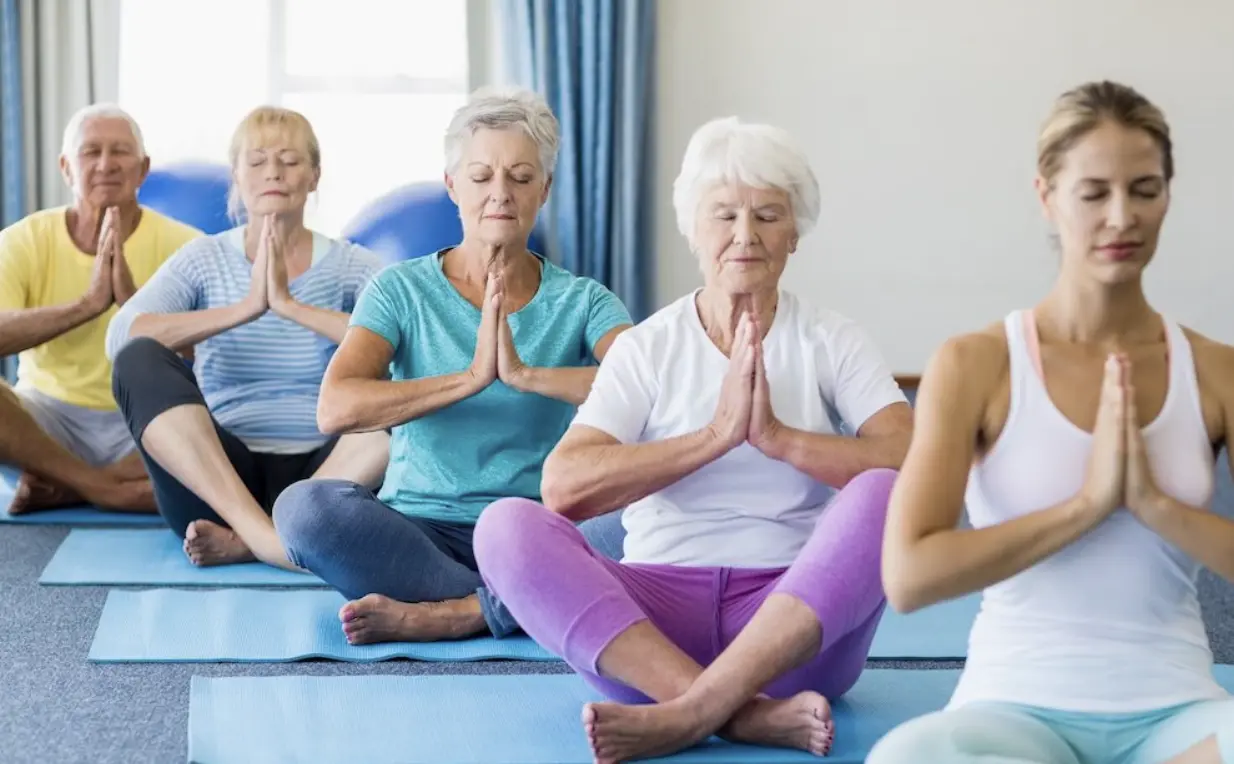
There’s something to look forward to every day. Key is staying active and fit through Zoom Fitness and Gentle Yoga, offered nearly every day. There are movie and New Yorker discussion groups, a Historical Society event, a cello performance and one with a doctor discussing advances in treating cancer. There’s a Zoom happy hour, lunch and knitting groups. You get the idea. They make it easy. Stay in your own home, join the village, take part in these activities and find new friends.
It's being called “The Great Retirement”
According to the PEW Research Center, by the fall of 2020, almost 30 million boomers had retired, an increase of 213% from the previous year. Seventy-five million baby boomers will retire by 2030. What will follow is being called the "The Great Retirement”. No one knows what this will look like or what the impact is going to be on the job market, on the myriad industries that serve the baby boomers. Many see a huge brain drain in the workforce as an experienced workforce retires.
Consumer spending will be affected as retirees produce less and consume and spend less. The baby boomers are recognized as the vocal generation with far-reaching influence. So it will be as they retire–a generation that is still refusing to go down quietly.
Janet Peischel is a rocket50 writer and the Owner of “Being Top of Mind” marketing consultancy. She writes about lifestyle issues, products and trends of the 50+ population. “We represent a huge market that’s vocal, active, and determined to stay active and involved!”
rocket50's mission is to empower people 50 and older to harness their potential and become the best versions of themselves in their 50s, 60s, 70s and beyond. We are committed to creating shared experiences and share proven tools that empower you to design a better, more enjoyable life in all its facets.